



EA Changed My Evolved Card and Ruined My FC 26 Tactics
- EA’s Change That Sparked the FC 26 Rage
- How Evolutions and Playstyle Changes Work
- Why One Playstyle Can Define an Entire Formation
- Rebuilding the Squad: Do Luna, Wilson and MLS Links
- Chemistry Headaches: Jordi Alba, Americans and Rosa
- Swaps, Evolutions and Picking Between Rio and R9
- Weekend League Matches: Winning but Still Furious
- Finding a New Low-Driven CAM (Shaw and Alternatives)
- Managing Coins, RTG Life and How ItemD2R.com Fits In
- Practical Tips If EA Changes Your Card
- Final Thoughts: Is the Anger at EA Justified?
EA’s Change That Sparked the FC 26 Rage
For many FC 26 players, Road to Glory (RTG) means carefully evolving cards, grinding objectives, and building a squad without spending real money. When EA alters one of those key evolved players after you’ve invested time and gameplay around them, it hits differently.
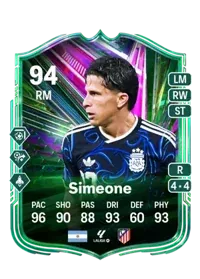
In this case, the breaking point was an evolved Chavi Simones card. The player had shaped his entire 4-2-3-1 system around Simones’ low driven plus playstyle. After a sudden update, EA removed low driven plus and replaced it with technical / R1 dribbling. On paper, that sounds like a neutral or even positive change. In practice, it completely destroyed a very specific play pattern that defined this user’s attack.
He wasn’t just frustrated; he said he couldn’t remember the last time he’d been that angry at EA Sports. He had just finished upgrades for Weekend League, completed a new defender in Richards, and was ready to push with his RTG squad. Then his core CAM felt like a stranger overnight.
How Evolutions and Playstyle Changes Work
Part of the frustration comes from expectations. When you evolve a player in FC 26, you usually assume:
- You’re locking in stats and playstyles for that specific item.
- Your practice with that card will remain valid over time.
- Any future balance changes will be small and predictable.
What actually happened was a reminder that EA can tune evolutions and playstyles server-side. That means even after grinding an evolution path and building tactics around it, the developer can:
- Adjust playstyles (add, remove or swap them).
- Shift the meta by buffing or nerfing certain mechanics.
- Indirectly invalidate a playstyle you relied on, such as low driven plus.
The player himself admits he may have misunderstood how evolutions work. He assumed his evolved Simones was fixed permanently. From a game design perspective, EA wants the ability to rebalance overpowered mechanics. From a user perspective, this feels like losing something you earned.
In particular, the removal of low driven plus from Simones hurt because it wasn’t just a detail—it was the cornerstone of his chance creation and finishing pattern.
Why One Playstyle Can Define an Entire Formation
In FC 26, playstyles aren’t cosmetic. They can shape the entire identity of a squad. For this RTG player, low driven plus was the engine of a very specific 4-2-3-1 game plan.
His approach looked like this:
- Use a solid double pivot in the 4-2-3-1 to recycle possession.
- Funnel the ball to Simones on the right CAM channel.
- Attack the box and finish with a right-footed low-driven shot into the far corner, over and over.
He had turned Simones’ low driven plus into a signature move, to the point where he even called similar finishes the “Chavi Simones special” later on, even when other players scored them.
When EA swapped that playstyle for technical / R1 dribbling, he lost:
- The reliable finishing animation he trusted.
- The muscle memory that made his attack feel automatic.
- The emotional connection to the card he had evolved.
Technical / R1 dribbling can be strong, but for his playstyle it was a poor trade. He didn’t want extra dribbling finesse; he wanted the low-driven laser he’d been using to beat keepers for weeks.
Rebuilding the Squad: Do Luna, Wilson and MLS Links
Instead of forcing himself to adapt to the new Simones, he decided to rework his starting XI. The first big move was dropping Simones from the eleven and bringing in a new MLS card he repeatedly called “Luna” before correcting himself to “do Luna”, a “Mexican beast” in his words.
He praised do Luna’s card design:
- Strong pace, shooting, passing and dribbling.
- Solid physical stats.
- 5★ weak foot and 4★ skills, ideal for a hybrid wide playmaker/finisher.
- A clean selection of playstyles that fit meta attacking patterns.
The plan was to shift his attacking shape:
- Play do Luna on the left for cut-ins and finesse shots.
- Move Wilson to the right side, hoping his regular low driven finish could emulate what Simones used to provide (even without the plus variant).
- Still maintain a 4-2-3-1 skeleton but alter how the CAMs and wide roles interact.
Ironically, his first few matches with do Luna went well—he even scored a crucial chance and admitted he would have discarded the card on the spot if it had missed. The early returns suggested that, tactically, the rebuild was working, even if emotionally he still missed his old Simones card.
Chemistry Headaches: Jordi Alba, Americans and Rosa
No FC 26 squad discussion is complete without chemistry drama, and this team is a perfect example. The manager wanted to move on from Jordi Alba, whom he clearly does not enjoy using. However, Alba’s links are key for:
- Multiple American players in the squad.
- The evolved card Rosa.
Removing Jordi Alba would blow up chemistry, forcing him to:
- Bench Rosa or shift him off chemistry.
- Reconfigure his back line and midfield links.
- Potentially bring in an entirely new left-side structure just to keep the team on full chem.
He also mentioned finishing evolutions for Rosa and McKenna, calling McKenna “incredible” thanks to:
- Excellent defensive and physical stats.
- Meta-relevant playstyles across the board.
- A surprising 5★ skill move rating, which is rare for that role.
On the bench, he had heavy hitters like Harry Kane, Alise, and even Kylian Mbappé. With Richards arriving, Mbappé dropped to the bench, which shows how committed this RTG manager was to using evolved and themed players over pure star power.
At one point he even considered using Richards as a center back, but decided against it due to the lack of specific defensive playstyles he values, especially now that he’s wary of EA potentially nerfing Bruiser, which he calls the most broken defensive mechanic he has ever seen.
Swaps, Evolutions and Picking Between Rio and R9
Beyond his own squad, he spent time analyzing the broader swaps program in FC 26. After letting it sink in, he highlighted two standout routes:
10-Swap Evolution Option
One of the most enticing rewards is a 10-swap evolution that lets you supercharge a card into an elite-level item. He cited the example of putting Di María into this evolution to generate a monster card with:
- Top-tier playstyles like low driven and R1 dribbling.
- A status upgrade to icon, improving chemistry and prestige.
- Stats and traits that make him feel like a completely different, endgame-level player.
From a value standpoint, he considers this evolution route capable of producing phenomenal, meta-defining cards for a relatively modest swap investment.
Rio Ferdinand vs. R9: Value vs. Fantasy
On the player side of swaps, he singled out a special Rio Ferdinand as arguably the best defensive pick available:
- Elite center-back stats.
- Premium playstyles like anticipate plus, intercept plus and jockey.
- Outstanding value relative to other options for strengthening the back line.
Yet, despite calling Rio the best value, he’s leaning toward choosing Ronaldo (R9) for one simple reason: on a pure RTG, he almost never gets to use R9. Even though he complained about R9 lacking a key playstyle—specifically, a through-ball trait—he still wants the once-in-a-cycle fantasy of driving an RTG with one of the game’s most iconic strikers.
Weekend League Matches: Winning but Still Furious
Once he jumped into gameplay, an interesting contrast appeared: he was winning matches, yet still raging at EA over the Simones change.
Match 1: Testing Do Luna and Wilson
In his first game, he took a sigh of relief when he saw the opponent wasn’t using the 4-4-1-1 formation, which he calls the worst to play against. He opened the scoring with Wilson, then conceded after pulling his center back out of position.
He quickly regained control, scoring with do Luna and praising the card for finishing a chance that simply had to go in. Later in the game, he created a chance down the right—exactly where Simones used to operate—and scored another low, clinical finish that he dubbed the “Chavi Simones special”, even though Simones was no longer the one delivering it.
Despite the win, the whole performance was colored by his lingering frustration over not being able to use his evolved Simones in the way he had practiced for weeks.
Match 2: Strong Opponent, Same Anger
The second match also avoided the dreaded 4-4-1-1. This time the opponent had a stacked squad and a more defensive 4-2-3-1 variant compared to his more aggressive setup.
He identified Marcelo as “cookable” defensively and targeted him frequently. He continued to complain about Bruiser plus, calling it broken and anticipating a nerf. Once again, Wilson scored a low-driven-style goal, proving that he could still execute that finishing pattern even without low driven plus on Simones.
Yet, his mood did not improve. He kept returning to the idea that EA had taken away the one distinct way he enjoyed scoring, insisting the game wasn’t as fun when he couldn’t lean on that specific low-driven plus shot from his favorite CAM.
On top of this, he vented repeatedly about AI defending, complaining that opponents sit back and let auto-positioning and auto-blocks do the work rather than manually pressing. He described defenders standing still in the box, forcing him to dribble around static bodies rather than engaging in the kind of manual-defending duels he finds satisfying.
Even while he comfortably moved to a 2–0 record, he was testing Simones again, trying low drivens and watching them fail. Each miss deepened his frustration and reinforced his determination to find a new CAM with a reliable low-driven finish.
Finding a New Low-Driven CAM (Shaw and Alternatives)
After those matches, the conclusion was clear: if EA was going to change Simones, he would simply have to pivot to another player who offered the finishing profile he needed.
While browsing the market, he spotted a card he loved the look of, around the 100K coin price point, featuring:
- The coveted low driven playstyle.
- Strong through-ball and pinging playstyles for creative passing.
- Stats tailored for an attacking midfielder role.
He identified this card as “Shaw” and decided not to buy immediately, preferring to wait for the price to fall as more packs hit the market. The plan for when he eventually buys Shaw is:
- Move Wilson to central CAM where he can influence play more.
- Use do Luna as a dribbling and through-ball threat from the wing.
- Deploy Shaw as the new low-driven specialist to replicate the finishing that Simones used to provide.
In other words, he’s rebuilding his entire attacking triangle around recapturing that one lost playstyle. It underlines just how critical specific mechanics are to individual playstyles in FC 26.
Managing Coins, RTG Life and How ItemD2R.com Fits In
When you’re running a strict RTG, every coin matters. This player is constantly juggling decisions like whether to:
- Buy a new CAM like Shaw now or wait for a price crash.
- Invest swaps into Rio Ferdinand for value or go all-in on the dream pick, R9.
- Hold onto players like Jordi Alba purely for chemistry reasons even if they don’t fit his preferred style.
For many players, especially outside the RTG purist mindset, there’s another route: using external marketplaces to obtain currency so they can react faster to changes like EA’s playstyle tweaks. When a key card gets altered or the meta shifts overnight, having spare coins can be the difference between being stuck with a broken system and quickly rebuilding a fresh, competitive squad.
Sites like ItemD2R.com focus on helping players who don’t have the time to grind every objective and Squad Battles game, but still want to experience high-level Weekend League squads. If you’re exploring this route, it’s crucial to use reputable sources and avoid shady sellers that put your account at risk.
ItemD2R provides options for those who want to buy coins fc 26 in a more streamlined way, avoiding the long grind that an RTG demands. Similarly, if you’re just starting a new account or trying to recover after a meta shift ruins your old squad, you can look into fc26 fifa coins packages to reset your club’s trajectory.
Of course, you should always balance convenience with your own enjoyment. Some players love the RTG grind and consider external coins off-limits; others simply want to test new tactical ideas and top-tier cards without spending dozens of hours in menus and low-division games. Either way, it’s useful to know that there are services specifically oriented around FC 26 coins for when you need to adapt quickly to EA’s balance changes.
Practical Tips If EA Changes Your Card
Whether you agree with EA’s decision or not, the reality is that evolved and special cards can change. Here are some practical ways to cope when a patch wrecks your favorite setup:
- Re-evaluate the card, not just the change: Sometimes a playstyle swap opens a new way to use the player. Simones with technical / R1 dribbling might excel as a central CAM weaving through tight spaces, even if he’s no longer a low-driven machine on the right.
- Rebuild one zone, not the whole squad: As this player did, focus on reworking a specific area—like your CAM triangle—rather than tearing everything down.
- Use friendlies or Rivals to test: Before taking a new setup into Weekend League, experiment in lower-stress modes to see if the new playstyles or players actually work for you.
- Track the meta playstyles: Keep an eye on which playstyles are being nerfed or buffed. Mechanics like Bruiser plus might get toned down, and playstyles like low driven can be adjusted later.
- Protect your mental game: If you find yourself raging like this creator, take the same approach he did—step away, cool down, and come back with a clear plan, such as waiting for Shaw’s price drop before making your next move.
Final Thoughts: Is the Anger at EA Justified?
From a competitive and emotional standpoint, it’s easy to see why this RTG player feels betrayed. He invested time, coins and tactical practice into an evolved Chavi Simones card, only for EA to swap out the exact playstyle that made the card special for him.
At the same time, live service sports games like FC 26 depend on balance patches. Overpowered mechanics—whether it’s Bruiser plus on defenders or a particular shooting playstyle—will always be targets for adjustment. The key takeaway is that, as players, we need to stay flexible and be ready to adjust our squads and tactics when EA tweaks the meta.
In this case, he ended his session 2–0, decided to take a break, and planned to pick up Shaw once the price dropped to restore his favorite low-driven finishing pattern. Whether you share his anger or think he should have expected changes, his story is a clear reminder: in FC 26, even evolved cards aren’t guaranteed to stay the same, and the most successful managers are the ones who can adapt—emotionally, tactically, and economically—when the game shifts beneath their feet.






















 OPEN FREE PLAYER PACK
-
FC 26 Greats of the Game – Release Date, All Players & How to Prepare (June 19)Jun 16,2026
-
FC 26 Samuel Eto'o Festival of Football Gauntlet — Is the Grind Worth It?Jun 16,2026
-
FC 26 Low Driven Shot — Controls, PlayStyle+ & When to Use It (2026 Guide)Jun 15,2026
-
FC 26 FUT Champions Tokens — Best Rewards & How to Spend (June 2026)Jun 15,2026
-
FC 26 Path to Glory Team 2 – Best Cards Ranked: Bellingham 96, Wirtz 96, Musiala 95Jun 14,2026
-
93+ UEFA Winners & TOTS Player Pick SBC FC 26 – Is It Worth It? (Expires June 16)Jun 14,2026
-
FC 26 Greats of the Game — Kempes & Rivellino New ICON Cards: Release Date June 19, What to KnowJun 13,2026
-
FC 26 Path to Glory Pedro Neto SBC — Worth It? 465K for a 95 RM (June 2026)Jun 13,2026













 YouTube
 Facebook
 Twitter
 Tiktok
 Discord
 Linktree






 Join us
