



Broken Future Stars Cards, Custom Tactics & Weekend League Tips

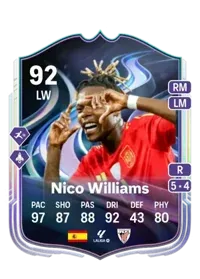

















- Future Stars overview: why these cards feel broken
- Finding a low‑driven right‑side replacement for Xavi Simons
- SBC choices, fodder regrets and evolution gems
- Meta formations he refuses to play: 4-4-1-1 & 4-5-1
- Analyzing the key Weekend League loss and defensive errors
- 4-1-2-1-2 narrow custom tactics & player roles
- Why Elite Division tactics don’t always work in Weekend League
- Future Stars Evolutions: the most broken upgrades
- Center‑back changes and dropping Van Dijk
- Luna & Shaw review: pros, cons and price trends
- How ItemD2R helps you build a Future Stars-ready squad
- Practical tips to finally hit 15–0
Future Stars overview: why these cards feel broken
Every year, Future Stars brings power‑crept cards, but this cycle’s release has pushed things to a new level. Between cracked Evolutions, stacked playstyles like Intercept+, Anticipate+, and Quick Step, and ultra‑meta stat spreads, many of these Future Stars are performing like end‑game icons in the middle of the cycle.
On a Road to Glory account, that power spike is even more noticeable. You’re facing squads full of fully evolved Future Stars, while carefully managing your fodder and coins to keep up. That’s exactly the context here: a Weekend League grind, a focus on staying competitive without going pay‑to‑win, and trying to squeeze every drop of value out of Future Stars content.
In this article, we’ll break down how the creator approached this promo, the custom tactics he tested, the defensive mistakes that cost him a 15–0 run, and how you can adapt those lessons to your own Weekend League grind.
Finding a low‑driven right‑side replacement for Xavi Simons
The starting point for this Weekend League session was a big change: EA adjusted Xavi Simons’ playstyle, stripping his reliable low‑driven shooting and swapping it for Tactical Dribbling. For a player who built his attack around low‑driven finishes from the right side, that was a major nerf.
His priorities for a replacement were clear:
- Right‑sided attacker who can cut in or stay wide
- Reliable low‑driven shots across goal and near post
- High pace and agility to exploit through balls
- Useful playstyles like Finesse Shot, Quick Step, or Technical
Future Stars cards like Luna and Shaw came into the conversation. Luna slotted naturally into the central playmaker role, while Shaw offered an interesting wide option with good movement and finishing. However, even after trying Shaw, he felt that she couldn’t quite replicate what Simons gave him specifically for low‑driven shots from tight angles.
This is an important lesson: playstyle changes can quietly kill a card’s role in your team. Always re‑evaluate how a card fits your system after major patches or database updates, especially if you rely on niche mechanics like low drivens or outside‑foot shots.
SBC choices, fodder regrets and evolution gems
Like many Road to Glory players, he’s constantly balancing short‑term upgrades with long‑term flexibility. One of his big regrets this Weekend League was completing the Richards SBC at right back, only to discover an Evolution option for a different right back that looks absolutely insane once fully upgraded.
That hindsight sting is familiar: you burn your high‑rated fodder on a solid card, then a week later an Evolution path appears that would have turned a cheap card into a top‑tier monster. His takeaway is one you should adopt too:
- Before doing expensive SBCs, check current and upcoming Evolutions.
- Ask if an evolvable card can reach a similar or better level than the SBC.
- Remember that Evolutions often bring premium playstyles like Intercept+, Tiki Taka, Pinged Pass, or Bruiser that SBCs may lack.
He also mentioned Upamecano (Upa) as a center‑back option with Intercept+, showing how heavily he values that playstyle in a game dominated by through balls and quick passes into the box.
Meta formations he refuses to play: 4-4-1-1 & 4-5-1
Despite pushing for 15–0, he flat‑out refuses to play what many consider the most dominant setups this year: 4-4-1-1 and 4-5-1. His reasoning is simple and very relatable: they’re effective, but they’re also repetitive and boring.
He calls out a specific pattern that he hates seeing and using:
- Build up slowly from the back
- Play into the CAM or wide midfielder
- Trigger a run and spam an early through ball
- Cut back or fire a low‑driven or finesse shot
In his view, these formations become oppressive higher up the ladder, especially in Elite Division. He suspects that the only real counter to a strong 4-4-1-1 user is often to mirror the formation—which he refuses to do on principle. He’d rather accept finishing 14–1 while actually enjoying what he’s doing than grind a soulless 15–0 with the same recycled patterns every match.
He also notes that the rewards for 15–0 don’t feel generous enough this year to justify sacrificing fun. If you’re feeling burned out by the meta, this is your reminder that it’s okay to pick a system you enjoy, even if you drop a win or two in the process.
Analyzing the key Weekend League loss and defensive errors
One of the most instructive parts of his run is the way he broke down a painful loss. At 7–0, heading toward a potential 15–0, he lost in the 90th minute after an intense match filled with low‑driven finesse finishes from his opponent.
Looking at stats, he felt he was the better attacker: more shots, higher expected goals, more pressure. But after reviewing the gameplay, he identified a critical habit that keeps costing him elite records:
- He switches too aggressively into his fullbacks while defending.
- He steps forward to challenge, mistimes the tackle, and leaves space behind.
- His center backs then slide out wide to cover the gap.
- This opens a channel between the center backs for simple through balls.
That chain reaction is deadly in this gameplay. Once your back line is stretched horizontally, even average opponents can repeatedly feed sprinting attackers with easy passes into huge gaps. He concluded that this habit is a key reason he regularly finishes 14–1 instead of securing a flawless 15–0.
The takeaway for your own defending:
- Use your CDM and midfielders to apply pressure as much as possible.
- Only pull out fullbacks when absolutely necessary, and avoid overcommitting.
- Let the AI hold the line for your defenders, and manually cover passing lanes instead of chasing the ball.
4-1-2-1-2 narrow custom tactics & player roles
With viewers repeatedly suggesting the 4-1-2-1-2 narrow, he decided he would only switch to it if he took a loss and was no longer on track for 15–0. Once that happened, he began testing a version that mirrors how he used to play in older FIFA titles.
Formation structure and instructions
His setup looked something like this:
- Strikers (ST & ST): both on an advanced forward type of role, staying high to stretch the defense and threaten through balls constantly.
- CAM (Luna): central playmaker, dropping in to link midfield to attack and feeding the strikers with through passes and 1‑2s.
- LCM (McKennie): true box‑to‑box, arriving late into the box and covering a ton of ground defensively.
- CDM (Veron): the anchor on stay back/defend, shielding the back four, cutting passing lanes, and protecting against counters.
- RCM (Lavelle): more of a creative playmaker CM, helping with build‑up and finding pockets between the lines.
- Fullbacks: both on stay back while attacking. He tested pushing them forward but felt it was too risky given how effective wing through balls are.
How it plays in game
The 4-1-2-1-2 narrow excels at:
- Central overloads with three midfielders and a CAM around the edge of the box
- Short passing triangles and quick one‑touch combinations
- Creating narrow overloads before slipping a through ball to either striker
The downside is the natural weakness on the wings. That’s why he refuses to push fullbacks too aggressively: one lost duel and the opponent is in acres of space with an easy cutback or through ball. If you run this system, you need discipline not to spam overlaps from both fullbacks at once.
Why Elite Division tactics don’t always work in Weekend League
One of his most interesting observations is the difference between Elite Division and Weekend League gameplay. His 4-2-3-1 setup dominates in Elite: structured, defensively solid, and excellent at controlling tempo against high‑level players.
In Weekend League, however, that same 4-2-3-1 can get exposed by simpler but more direct styles. People are more willing to:
- Spam first‑time through balls down the wings
- Play for low‑driven crosses and cutbacks
- Abuse sprint speed and basic mechanics over intricate build‑up
He also notes that his 4-4-2 works on his main account with elite defenders and midfielders, but the same formation doesn’t feel as stable on his RTG because the personnel simply aren’t at that level. The message is clear:
- Copying tactics without matching player quality will rarely give the same results.
- Always adapt your formation to both your squad and the mode you’re playing.
Future Stars Evolutions: the most broken upgrades
Future Stars Evolutions have quietly created some of the most overpowered cards in the game, especially for Road to Glory players. He highlights multiple examples where Evolutions turn a good starter card into a dominant piece of any Weekend League squad.
The key standout traits he’s looking for from Evolutions include:
- High pace with strong acceleration for explosive first steps
- Boosted defending for fullbacks and center backs, especially interceptions
- Premium playstyles like Intercept, Anticipate+, Bruiser, and Quick Step
- Creative traits such as Tiki Taka, Pinged Pass, and Through Ball for midfielders and attackers
With the right Evolution path, you can manufacture players that punch far above their weight, rivaling or even surpassing many promo cards. That’s another reason he regrets spending so much fodder on the Richards SBC: a carefully evolved right back would have offered similar or better performance with more meta playstyles.
Center‑back changes and dropping Van Dijk
One of the boldest decisions he made for this Weekend League session was benching Van Dijk after hundreds of games—not because Van Dijk suddenly became bad, but because he felt something wasn’t clicking anymore.
His main complaint was that Van Dijk didn’t seem to be locking onto loose balls as reliably as he expected. In a meta where every bounce can turn into a one‑on‑one, that can be frustrating. He wanted to test center‑back pairs with more frequent Intercept+ triggers and sharper auto‑animations on loose passes.
This is an excellent reminder not to be afraid of rotating out big names when they don’t feel right in your system. Sometimes a cheaper, more agile defender with the correct playstyles will outperform a slower, bulkier star, especially if your defending style involves a lot of manual jockeying and lane cutting.
Luna & Shaw review: pros, cons and price trends
Two Future Stars that stood out during his run were Luna and Shaw.
Luna as a central playmaker
Luna fit perfectly as the central creator in his 4-1-2-1-2 narrow. Her strengths include:
- Excellent close control in tight central areas
- Sharp passing into the strikers and wide channels
- The ability to turn under pressure and find angles for through balls
In a system built on central overloads and quick combinations, Luna is exactly the kind of card that makes the formation tick.
Shaw’s performance and price drop
Shaw, on the other hand, delivered a mixed experience. She was solid and clearly usable at a high level, but she never truly replaced what Simons gave him in terms of low‑driven shot reliability from the right. On top of that, he bought Shaw at a higher price, only to watch her value drop significantly soon after.
That combination—good but not perfect performance plus a large price drop—made the purchase feel a bit rough. Still, for many squads, she remains a strong wide attacking option. Just don’t expect a like‑for‑like replacement for the old version of Simons if your game is heavily built around low‑driven mechanics.
How ItemD2R helps you build a Future Stars-ready squad
All of these tactical tweaks and squad experiments share a common theme: you need a flexible budget if you want to keep up with the meta, especially during promos like Future Stars. Whether you’re shuffling center‑backs, testing new right‑sided attackers, or committing fodder to Evolutions, every decision costs resources.
This is where a reliable external resource for in‑game currency becomes incredibly valuable. Instead of sinking hours every day into low‑value trading or grinding repetitive menus, many players choose to supplement their club with secure, fast deliveries of coins and points. A trusted provider allows you to:
- Move quickly when a broken Future Stars card or Evolution path appears
- Try different meta formations without being locked into one squad build
- Recover from mistakes—like an SBC you regret or a player who suddenly gets nerfed
If you want to build a competitive team around these Future Stars cards, you can consider safe third‑party options such as fut coins fc26 and fifa points offered by ItemD2R. Their services are designed for players who still want a Road to Glory feel but don’t have the time to grind endlessly or flip the market after every patch.
By boosting your budget intelligently, you can rotate cards like Luna, Shaw, or an Intercept+ center‑back in and out of your squad without completely draining your club. That freedom is exactly what you need when the game keeps shifting with new promos, balance changes, and meta evolutions.
Practical tips to finally hit 15–0
To wrap everything together, here are the key lessons from this Weekend League run that you can apply immediately:
- Respect playstyle changes: if a key card loses its defining trait (like low‑driven shooting), re‑evaluate its place in your team.
- Don’t rush SBCs: always check current and upcoming Evolutions before using high‑rated fodder.
- Pick a formation you enjoy: 4-4-1-1 and 4-5-1 are strong, but if they bore you, consider alternatives like 4-2-3-1 or 4-1-2-1-2 narrow.
- Defend with discipline: stop over‑controlling your fullbacks. Use your CDM and midfielders as the first line of defense.
- Adapt to each mode: what works in Elite Division might not be optimal in Weekend League’s more chaotic, through‑ball heavy environment.
- Test different CB profiles: don’t be afraid to bench big names if they don’t fit your style; look for Intercept+ and strong auto‑animations.
- Use your budget smartly: whether through grinding or services like ItemD2R, make sure you have enough resources to react to meta shifts.
With stronger awareness of your defensive habits, smarter SBC and Evolution choices, and a squad tailored to your preferred style, you give yourself the best possible chance to break through that final barrier and finally hit the coveted 15–0 in Weekend League.
-
FC 26 Path to Glory Team 1: Predicted Players, Release Date & Live Upgrade Guide (June 5, 2026)Jun 03,2026
-
FC 26 Festival of Football: Full Promo Schedule, Path to Glory & What to Expect (June–July 2026)Jun 03,2026
-
EA FC 26: Ultimate Team Token System ExplainedJun 03,2026
-
FC 26 Ultimate TOTS Upgrade SBC — Is It Worth It? Last Chance Before June 3 DeadlineJun 03,2026
-
EA FC 26 Path to Glory — World Cup Upgrade TrackerJun 02,2026
-
EA FC 26 Path to Glory: Start Date, Leaks & Best TipsJun 02,2026
-
How EA FC 27 Can Win Back Frustrated FC 26 PlayersJun 02,2026
-
EA FC 26 Meta Update: Analog Sprint, Top Formations & 500k SquadJun 02,2026













 YouTube
 Facebook
 Twitter
 Tiktok
 Discord
 Linktree






 Join us
