



Real Madrid 3-0 Athletic Bilbao: Mbappé Masterclass & Title Race Back On















- Match overview: Real Madrid 3-0 Athletic Bilbao
- A return to Real Madrid DNA: intensity, hunger and control
- Mbappé the best in the world? Breaking down his performance
- Vinicius Jr. & Mbappé: can this partnership really work?
- The Jude Bellingham question and squad rotation
- Key match stats and what they tell us
- La Liga title race: pressure on Barcelona again
- From Bernabéu to your console: Real Madrid style & FUT coins in FC 26
- Tactical notes: why this 3-0 felt different
- Final thoughts: what comes next for Real Madrid
Match overview: Real Madrid 3-0 Athletic Bilbao
Real Madrid didn’t just beat Athletic Bilbao – they demolished them 3-0 in a performance that felt like a throwback to peak Bernabéu nights. After weeks of criticism for looking slow, disjointed and almost disinterested, this version of Madrid was the complete opposite: aggressive, organized and ruthless.
The goals came from familiar heroes. Eduardo Camavinga opened the scoring, and Kylian Mbappé added two more, including a solo strike that instantly drew comparisons with Cristiano Ronaldo at his lethal best. Beyond the scoreline, what stood out most was the energy and intent the team showed from the first whistle.
This win pulls Madrid to within a single point of Barcelona and reignites a La Liga title race that many thought was drifting away. For fans, there’s a strange mix of excitement and confusion: if the team can play like this, why haven’t they done it more often this season?
A return to Real Madrid DNA: intensity, hunger and control
For a long stretch, Madrid’s performances felt flat. The pressing was half-hearted, midfielders were jogging instead of dominating, and the attack often relied on isolated moments of individual brilliance. Against Athletic Bilbao, that narrative flipped completely.
What we saw looked like classic Real Madrid DNA:
- High tempo, vertical attacks when space opened up
- Confident possession when game management was needed
- Relentless work rate from front to back
- Clear tactical structure instead of chaos and improvisation
Madrid pressed in coordinated waves, won second balls in midfield, and forced Bilbao into rushed decisions. Instead of the slow, predictable buildup we’ve seen lately, there was real purpose with every pass. The team played with hunger, motivation and physicality, and that made the difference.
This kind of performance raises an obvious question: is this the new standard, or just a one-off reaction to pressure and criticism? If Madrid can consistently tap into this mentality, the rest of La Liga and Europe should be worried.
Mbappé the best in the world? Breaking down his performance
Kylian Mbappé has already had explosive nights in his career, but this game felt special because of how complete his display was. He wasn’t just a finisher waiting for service; he dictated attacking patterns, threatened constantly in behind, and was devastating in transition.
The Ronaldo-style goal: individual brilliance
His first goal will be replayed for months. Picking up the ball with defenders backpedaling, Mbappé drove at the back line, shifted inside and unleashed a strike from outside the box that screamed Cristiano Ronaldo. The movement, the body shape, the timing of the shot – it all evoked the prime CR7 days in Madrid white.
If you muted the footage and put Ronaldo commentary over that clip, it would fool more than a few fans. It was that iconic: a goal built purely on pace, balance and cold-blooded finishing.
Chasing Ronaldo’s calendar-year record
On top of the eye test, the numbers are staggering. Mbappé is sitting on 62 goals in the calendar year, pushing dangerously close to Cristiano Ronaldo’s legendary 69-goal mark at his peak. To match that record, he needs seven goals in his final four matches of the year.
Those remaining fixtures include tough tests like Manchester City in Europe, plus La Liga battles against Celta Vigo, Sevilla and Real Betis. Even if he falls short of Ronaldo’s record, hitting 60+ goals in a year while adapting to a new league, new teammates and new tactical demands is outrageous. It’s a legitimate argument for him being the best player in the world right now.
Vinicius Jr. & Mbappé: can this partnership really work?
One of the biggest pre-season debates was whether Vinicius Jr. and Mbappé could coexist in the same XI. Both love attacking from the left, both want to be the focal point, and both are used to being the main star in their previous structures.
Against Athletic Bilbao, that doubt quieted down. Their positioning and decision-making showed there’s a realistic blueprint for them playing together:
- Vini often started wide and looked to isolate his full-back
- Mbappé drifted more centrally, making runs between center-backs
- They alternated who attacked the half-space and who stretched the line
Instead of clashing, their movements complemented each other. When Vini drove at the defense, Mbappé positioned himself to finish. When Mbappé dropped deep or wide, Vini attacked the gaps left behind. The chemistry is far from perfect, but this match proved the partnership can be more than a marketing fantasy.
The key will be consistency. One brilliant game doesn’t erase tactical and ego challenges. But if they both commit to the team’s structure, they can form one of the most terrifying forward duos in modern football.
The Jude Bellingham question and squad rotation
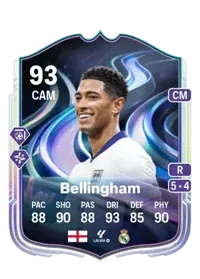
If there’s one tactical headache for the coach, it’s how to fit everyone in. Jude Bellingham has been outstanding as a free-roaming 10, but there are growing whispers that the team sometimes looks more balanced with one superstar out rather than all of them in at the same time.
The dilemma isn’t about quality – Bellingham, Vinicius and Mbappé are all world-class. It’s about roles and spacing:
- Bellingham thrives when he can attack the box late from midfield
- Mbappé prefers to start high and run into space
- Vini wants freedom to take on his defender 1v1
When all three are on the pitch, the central areas can get crowded, and defensive transitions become more fragile. Strangely, we’ve seen Madrid look very good when one big name is missing, simply because the roles become clearer for everyone else.
However, this is what coaches call a good problem. Most clubs would love to be debating who to bench between Bellingham, Mbappé and Vinicius. The real challenge is having the courage to bench a superstar when the tactical plan demands it, and making rotation decisions for the good of Real Madrid the team, not any individual fanbase.
Key match stats and what they tell us
The numbers from this match match the eye test almost perfectly. Madrid weren’t just efficient – they were dominant without being reckless.
- Shots: 10 total, 8 on target – elite shot accuracy and chance creation
- Possession: around 58% – control without sterile passing
- Passes: over 540 with ~94% accuracy – calm on the ball, minimal sloppiness
- Discipline: only four fouls, zero yellow cards – aggressive but controlled
- Offsides: just one – smart timing of runs, especially from the forwards
These stats paint the picture of a team that knew when to push and when to manage the game. After taking the lead, Madrid didn’t panic or overcommit. They stayed compact, waited for Bilbao to open up, and then punished the space on the counter.
The only major negative on the night was the injury to Trent, who had been finally settling into his role and showing positive signs. If the injury is serious, it could force more adjustments in upcoming games and test the squad depth once again.
La Liga title race: pressure on Barcelona again
This 3-0 win does more than just boost morale – it changes the psychology of the title race. With Madrid now just one point behind Barcelona, every matchday becomes a mini-final for both sides.
Several key dynamics are in play:
- Barcelona’s improved form has forced Madrid to step up their intensity
- Madrid’s earlier dropped points mean they have very little margin for error
- Every time one of them plays first, the other responds under pressure
Performances like this against Bilbao do more than just add three points; they send a message. If Madrid can keep this level of passion and organization for the rest of the season instead of drifting into lazy spells, La Liga could turn into one of the most exciting title battles in recent years.
European nights against giants like Manchester City will also test whether this newfound energy is sustainable or just situational. But for now, the title race is very much alive.
From Bernabéu to your console: Real Madrid style & FUT coins in FC 26
Matches like Real Madrid 3-0 Athletic Bilbao don’t just hype football fans – they instantly influence how people build their squads in football games. After watching Mbappé dominate and Vinicius terrorize defenders, a lot of players jump straight into FC 26 Ultimate Team trying to recreate that same attacking power.
The problem? Superstar cards, meta center-backs and elite full-backs are never cheap. If you want an in-game front line that mirrors Madrid’s ruthlessness, you’re going to need a solid budget of FUT Coins to make it happen. Whether you’re targeting Mbappé’s latest special card, a boosted Vinicius Jr., or high-rated midfielders to control the tempo like Camavinga, coins are the currency that unlocks those options.
This is where planning your club economy becomes as important as your tactics. Knowing when to buy, when to sell and how to stretch your balance of fut coins fc26 can be the difference between a generic squad and a team that actually reflects the intensity and style you see from Real Madrid in real life. Many players choose reliable third-party marketplaces like ItemD2R.com to supplement their in-game earnings so they can skip the grind and focus on gameplay, tactics and weekend league results.
For gamers who watch football obsessively and then jump into FC 26 to relive those moments, aligning your virtual squad with what you see on TV is part of the fun. You can test your own version of Mbappé–Vini chemistry, experiment with different formations to fit all your stars, and see if you can manage rotation better than a real-world coach. With the right squad building and a smart approach to your coin resources, you bring that Bernabéu-level excitement straight to your console or PC.
Tactical notes: why this 3-0 felt different
Part of what made this performance so satisfying was how coherent the tactical plan looked. Madrid didn’t rely solely on individual brilliance; the structure maximized their stars.
Coordinated pressing and compact shape
The press started from the front, with Mbappé and Vinicius funneling play wide instead of allowing easy passes into midfield. The midfield line then stepped up aggressively, cutting off passing lanes and forcing Bilbao long. Whenever the ball was lost, several players reacted at once instead of just one chasing helplessly.
This compactness meant Bilbao rarely found space between the lines. Madrid recovered possession quickly and often started attacks from dangerous zones instead of from deep inside their own half.
Balanced attacking patterns
In attack, Madrid alternated between quick vertical breaks and more patient positional play. When Bilbao’s defensive line was high, Mbappé attacked the channels. When they dropped deep, the full-backs overlapped, and midfielders probed around the box.
Crucially, the team didn’t leave themselves exposed. The holding midfielder stayed disciplined, and one full-back often kept a more conservative position when the opposite side pushed forward. It was a mature performance that showed clear coaching and buy-in from the players.
Final thoughts: what comes next for Real Madrid
This 3-0 destruction of Athletic Bilbao will go down as one of Real Madrid’s most convincing league performances in recent years. It had everything fans have been begging for: intensity, structure, flair and a sense of joy in the way the team played.
Mbappé looks like a genuine contender for the unofficial “best player in the world” tag, Vinicius Jr. is adapting to a new dynamic without losing his edge, and the squad – when focused – can match anyone in Europe. The only real concerns are managing injuries, keeping the stars tactically compatible, and sustaining this level over a long season.
If Madrid can lock in this mentality and avoid slipping back into laziness or complacency, the La Liga title race is wide open, and their European ambitions remain very real. For fans and gamers alike, nights like this are a reminder of why Real Madrid’s badge carries such heavyweight expectations – and why trying to replicate that dominance in FC 26 will always be part of the fun.
To dive deeper into tactical analysis and advanced stats for matches like this, resources such as UEFA’s official site and FBref offer valuable insights that complement what you see on the pitch or on your screen.
-
FC 26 Path to Glory Team 1: Predicted Players, Release Date & Live Upgrade Guide (June 5, 2026)Jun 03,2026
-
FC 26 Festival of Football: Full Promo Schedule, Path to Glory & What to Expect (June–July 2026)Jun 03,2026
-
EA FC 26: Ultimate Team Token System ExplainedJun 03,2026
-
FC 26 Ultimate TOTS Upgrade SBC — Is It Worth It? Last Chance Before June 3 DeadlineJun 03,2026
-
EA FC 26 Path to Glory — World Cup Upgrade TrackerJun 02,2026
-
EA FC 26 Path to Glory: Start Date, Leaks & Best TipsJun 02,2026
-
How EA FC 27 Can Win Back Frustrated FC 26 PlayersJun 02,2026
-
EA FC 26 Meta Update: Analog Sprint, Top Formations & 500k SquadJun 02,2026













 YouTube
 Facebook
 Twitter
 Tiktok
 Discord
 Linktree






 Join us
