



Mo Salah, Arne Slot and Liverpool: What’s Really Going On?
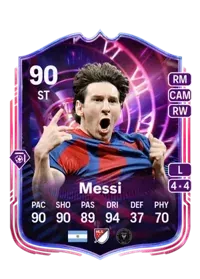













Mohamed Salah’s recent comments about his situation at Liverpool and his relationship with Arne Slot have sent shockwaves through the football world. For many fans, it feels like the possible end of an era – and a moment that could reshape Liverpool’s dressing room and long‑term project.
- Salah vs. Slot: What Happened and Why It Matters
- Broken Promises and Broken Trust Inside Liverpool
- Is Salah Right About English Media Treatment?
- How This Rift Impacts Liverpool’s Dressing Room
- “Slot Out or Salah Out?” – Can Both Stay?
- AFCON, Saudi Interest and Salah’s Liverpool Future
- From Klopp’s Unity to Today’s Turmoil
- What This Drama Teaches Football Gamers (and ItemD2R Players)
- Conclusion: Something Isn’t Right at Liverpool
Salah vs. Slot: What Happened and Why It Matters
Mohamed Salah is not just another Liverpool player. He is a modern club legend, a record‑breaker and one of the defining forwards of his generation. That is exactly why his recent public remarks about his treatment at the club – and indirectly about manager Arne Slot – feel so seismic.
In a rare and emotionally charged interview, Salah hinted that:
- He does not understand what went wrong or why his situation has deteriorated.
- He was given certain promises by Liverpool in the summer that have not been honored.
- He feels singled out by media criticism compared with other Premier League stars.
- He is preparing mentally to say goodbye to the Anfield crowd before heading to the Africa Cup of Nations.
For many supporters, those last points sound less like frustration and more like a farewell message. When a player of Salah’s stature publicly questions the club’s direction and his own treatment, it almost always means the relationship is close to breaking point.
Broken Promises and Broken Trust Inside Liverpool
One of the most worrying parts of Salah’s comments is his reference to promises made in the summer that were not kept. While we don’t know the internal details, this could refer to:
- Assurances about his role in Slot’s tactical system.
- Commitments on contract, leadership status or long‑term plans.
- Guarantees around squad strengthening to keep Liverpool competitive.
When a senior player feels misled, it goes far beyond disagreements over tactics or substitutions. It becomes a question of trust. Salah effectively said he doesn’t know what he did wrong or why the situation changed, which suggests he feels blindsided by the club’s decisions.
This is dangerous territory for any elite dressing room. Top players accept competition and criticism, but they expect clarity. Once a legend starts to believe the club is not honest or loyal, the issue rarely stays contained to one individual.
Is Salah Right About English Media Treatment?
Salah also highlighted how he believes he is treated differently by the English media compared with other star forwards. He mentioned Harry Kane as an example: when Kane goes through a dry spell, the narrative is often “he will score again,” whereas Salah hears calls for him to be benched.
He even apologized to Kane while making the comparison, making it clear his issue is not with other players, but with the double standards in coverage. Historically, the English football press has been ruthless – from early mockery of Cristiano Ronaldo at Manchester United to the intense tabloid scrutiny of David Beckham’s personal life.
On one level, harsh commentary is simply part of playing in England. On another, it’s understandable that Salah feels worn down by criticism, especially given his goal record since arriving in the Premier League. If he believes the club isn’t defending him publicly or privately, that adds another layer of frustration.
When a star feels both unprotected by the club and targeted by the media, it creates an emotional distance that’s hard to repair, particularly if results on the pitch are already underwhelming.
How This Rift Impacts Liverpool’s Dressing Room
Inside the dressing room, Salah isn’t just a top scorer. He is a cultural reference point, a professional example, and for many players, a close friend. When he suggests he’s being disrespected, it forces everyone in the squad to take a mental position, even if they remain publicly neutral.
Key factors at stake include:
- Loyalty – Long‑term team‑mates may feel that if Salah can be treated like this, anyone can.
- Authority – If players believe the manager has mishandled a legend, they may question his future decisions.
- Unity – Internal splits can appear between those who back the manager and those who sympathize with Salah.
Even if no open rebellion occurs, the atmosphere changes. The sense of “we’re all in this together” that defined Liverpool under Jürgen Klopp starts to erode. Small frustrations grow faster when a team is already under pressure from poor results and uncertainty about key players.
“Slot Out or Salah Out?” – Can Both Stay?
The situation has led some observers to frame the crisis as a brutal ultimatum: Slot out or Salah out. The classic line in football is that no player is bigger than the club, and that remains true. But in real‑world dynamics, the departure of a figure like Salah cannot be treated as a routine transfer.
There are several scenarios:
- Salah stays, Slot stays – This would require a serious reset of communication, clear public backing, and visible respect on both sides. Given the tone of Salah’s comments, this looks difficult.
- Salah leaves, Slot stays – The club backs the manager’s project. But players who feel close to Salah may struggle to fully trust the leadership, especially if they feel his exit was avoidable.
- Both leave – The most extreme scenario, signaling a deep structural failure. It would trigger a major rebuild and a complete identity reset.
The argument that “if Salah goes, the manager should go too” is not about elevating a player above the badge. It’s about acknowledging that the relationship damage inside the squad might be impossible to repair with only one of them removed. If the core trust in Slot is broken because of how Salah’s saga was handled, keeping just one party may not solve anything.
AFCON, Saudi Interest and Salah’s Liverpool Future
One of the most striking details in Salah’s comments is how he talked about inviting his parents to the Brighton game, saying he didn’t even know if he would play but would enjoy the occasion. He described it as a chance to say goodbye to the fans before leaving for the Africa Cup of Nations – and admitted he doesn’t know what will happen after that.
Reading between the lines, this sounds like a player preparing himself – and the supporters – for the possibility that he won’t return as a Liverpool player after AFCON. That opens the door to several possibilities:
- A mega‑money move to Saudi Arabia, where clubs have already shown willingness to invest heavily in big names.
- An accelerated exit negotiated during or just after the international tournament.
- A temporary cooling‑off period that still ends in a summer transfer.
From a purely sporting perspective, Liverpool lose not only goals but a symbol of their rise to the top table of European football. From a financial angle, the club must weigh up Salah’s value now versus the risk of a further drop in form or contract leverage.
From Klopp’s Unity to Today’s Turmoil
Under Jürgen Klopp, Liverpool were famous for looking cohesive, emotionally aligned and resilient. Even in tough seasons, you rarely heard public shots fired from within. The messaging was usually clear: togetherness, belief, and backing for the players.
That image is now under threat. Suddenly, your most productive forward of the modern era is on the bench or marginalized, there are rumors about other key players, and the results on the pitch aren’t consistently masking the noise off it. When a dressing room that used to feel unbreakable begins to show cracks, fans naturally start to worry that something deeper has changed.
The current situation doesn’t look like a one‑off misunderstanding. It feels like a structural problem in how the club’s hierarchy, coaching staff and senior players communicate and manage expectations. Salah’s words suggest he believes Liverpool “don’t want their greatest player in a long time to play for them” – that’s not just annoyance, that’s heartbreak.
What This Drama Teaches Football Gamers (and ItemD2R Players)
For many of us, football isn’t just about watching matches – it’s about living the game through titles like EA FC and FIFA Ultimate Team. The Salah–Slot situation at Liverpool actually mirrors decisions you constantly make as a player and squad builder in your football games.
In Ultimate Team, when you bench a superstar card or change your tactical system, you’re taking a calculated risk. Drop a key striker from your line‑up, and you might instantly feel the impact on chemistry, cohesion and results. The same logic applies in real life: removing a figure like Salah from the XI can disrupt the balance far beyond his goals and assists.
That’s why so many competitive players put serious thought into how they construct their teams and manage their resources. If you’ve ever had to decide whether to cash in on a top card or completely rebuild around a new tactic, you understand exactly the kind of dilemma Liverpool are facing now.
For gamers who want to accelerate that process in EA FC / FIFA style modes, in‑game currency becomes crucial. Instead of grinding for weeks, players often look for reliable solutions to upgrade their squads quickly and safely. When doing so, it’s important to choose trusted sources. Many fans opt to buying fifa ultimate team coins from established platforms so they can bring in elite forwards, creative midfielders or rock‑solid defenders to stabilize their virtual club – just like Liverpool need balance and leadership to stabilize their real squad.
If budget matters – and it usually does – players also pay close attention to price. Going for the buy fifa coins cheapest deals from a reputable provider allows you to test new formations, replace underperforming stars and experiment with different playstyles without ruining your wallet. With a deeper coin balance, you can afford to adapt when a big personality leaves your squad or when a new meta formation demands different player profiles.
In that sense, the Salah saga is a useful reminder: whether in real‑world football or in your favorite game modes, long‑term success depends on more than individual brilliance. You need communication, trust and the flexibility to rebuild when something clearly “isn’t right” – and having the right resources and tools at your disposal makes that rebuild a lot smoother.
Conclusion: Something Isn’t Right at Liverpool
Mohamed Salah’s explosive comments have exposed more than personal frustration. They have highlighted a deeper issue at Liverpool: a breakdown in trust, communication and identity between a legendary player, a new manager and the club’s hierarchy.
Whether this ends with Salah’s departure, Slot’s departure, or a highly unlikely reconciliation, one thing is clear – Liverpool have a serious internal problem to solve. How they handle the next few months will shape not only their sporting future, but also how players, fans and the wider football world view the club’s values.
For now, it feels like there is no simple way back. The relationship damage looks real, the emotions are raw, and the message from Salah is loud: something at Liverpool has gone badly wrong, and unless it’s fixed, one of the greatest players of his generation is ready to walk away.
-
FC 26 Path to Glory Team 1: Predicted Players, Release Date & Live Upgrade Guide (June 5, 2026)Jun 03,2026
-
FC 26 Festival of Football: Full Promo Schedule, Path to Glory & What to Expect (June–July 2026)Jun 03,2026
-
EA FC 26: Ultimate Team Token System ExplainedJun 03,2026
-
FC 26 Ultimate TOTS Upgrade SBC — Is It Worth It? Last Chance Before June 3 DeadlineJun 03,2026
-
EA FC 26 Path to Glory — World Cup Upgrade TrackerJun 02,2026
-
EA FC 26 Path to Glory: Start Date, Leaks & Best TipsJun 02,2026
-
How EA FC 27 Can Win Back Frustrated FC 26 PlayersJun 02,2026
-
EA FC 26 Meta Update: Analog Sprint, Top Formations & 500k SquadJun 02,2026













 YouTube
 Facebook
 Twitter
 Tiktok
 Discord
 Linktree






 Join us
