



Future Stars Youth Cup Guide & Road to Karl (FC 26 Coins Tips)
- Future Stars Youth Cup & Road to Karl Overview
- Daily Entries, Rule Confusion & Quality-of-Life Tips
- Casual Players, Evolutions & Why Accessibility Matters
- Sweaty Games, Glitches & Toxic Behaviour in the Cup
- Future Stars Team 2: Packs, Rarities & the Road to Karl
- Rewards, SBCs, Picks & Squad Philosophy
- Youth Cup Gameplay Experience & Practical Tips
- Future Stars Academy & Evolution Planning
- How ItemD2R Fits In: Squads, Time-Saving & Coin Strategy
- Chill Gaming, Fitness & Looking Beyond the Meta
Future Stars Youth Cup & Road to Karl Overview
The Future Stars Youth Cup has quickly become one of the most talked‑about limited‑entry modes in FC. In this stream recap and strategy guide, we follow the full "Road to Karl" journey: from confusion around the Youth Cup rules, through sweaty finals and meta teams, all the way to securing the trophy and planning the next big Evolution project.
Along the way you'll learn how the three‑goal auto‑end rule can massively speed up your Evolution progress, why Future Stars Team 2 makes silver and bronze packs surprisingly interesting, and how to build a fun squad that doesn't rely on pure meta sweat. We'll also touch on smarter ways to manage your economy and when it can make sense to look at external solutions for squad building and coins.
Daily Entries, Rule Confusion & Quality-of-Life Tips
The stream opens with a light, jokey intro before diving straight into the Youth Cup rules. One major issue: the game client showed different entry information in different languages.
In the German interface, it initially looked as if the mode had very limited entries overall; switching to English revealed the real rule: "six entries per day". That small line of text completely changes how you plan your play sessions and Evo grinds.
Key takeaways from the discussion:
- Always double‑check the in‑game description after patches, ideally in English, to avoid misunderstandings.
- The Cup resets at 19:00 (server time in the stream), so you can schedule your daily runs around that if you want to maximize entries.
- Six games per day is enough to grind Evolutions, test tactics and still keep the mode from becoming a full‑time job.
During the stream he even shows the menu live, confirming that the Youth Cup really does say "six entries per day", which calms the chat and clears up earlier panic about a potential hard nerf to entries.
Casual Players, Evolutions & Why Accessibility Matters
A recurring theme in the stream is the balance between competitiveness and accessibility. The creator fully accepts that better players should earn better rewards in a competitive mode – that's the nature of ranked play and weekend league‑style formats.
However, when it comes to Evolutions, his stance is clear: they have to remain realistically achievable for casual players. Evo cards are one of the main systems keeping everyday players engaged with FC; locking meaningful Evo progress behind extreme sweat or unfair matchmaking is a fast way to burn out the broader community.
From his perspective:
- Evolutions are a long‑term engagement system, not just a sweaty grind.
- Casual players need modes where they can make progress without facing elite, top‑1% squads every single game.
- The Youth Cup is fun, but the experience is damaged whenever it becomes flooded with overpowered icons and top promo cards.
He uses his own approach as an example: he wants to build unique Evo projects that feel personal, not just copy‑paste whatever the meta demands.
Sweaty Games, Glitches & Toxic Behaviour in the Cup
Like many live streams, chat quickly turns to the less pleasant side of the game: sweaty gameplay, glitches and toxicity. Several specific issues are highlighted and criticised:
- "Controller clamping": players physically wedge their controller to let the in‑game character stand still or waste time, hoping the opponent quits. It's legal but extremely frustrating and offers no fun to either side.
- Quit mechanics: when players abuse the way rage quits or disconnects are handled to avoid bad stats or to grief opponents.
- Toxic celebrations and gestures: especially in a Youth Cup environment that should be light‑hearted, seeing constant toxic behaviour (time‑wasting, mock celebrations, toxic messages) wears people down.
- Server issues and disconnects: random drops or sluggish servers make close games feel unfair and unpredictable.
He points out a curious contradiction: some players seem determined to make sure nobody else gets easy wins or progress, even when they lose absolutely nothing by being generous. Instead of scoring quick own goals in a clearly lost match, they clamp the controller and waste everyone's time. That mindset, in his view, is far more damaging to the community than any overpowered card.
At the same time, he does acknowledge a small upside to the limited entries: if abused properly, the daily cap can indirectly reduce some forms of time‑wasting, because people value their runs more. But overall, the experience still suffers when glitchy tactics become the norm.
Future Stars Team 2: Packs, Rarities & the Road to Karl
After covering rules and behaviour, the stream shifts to content: Future Stars Team 2. On screen, he goes through the squad card by card, paying close attention to which special items are based on gold, silver or bronze versions.
Why does this matter? Because it changes how you should think about pack value. In particular, he notes that:
- Several Future Stars Team 2 items are attached to silver and bronze base cards.
- That means silver and bronze packs are not just fodder – they can theoretically produce high‑value promo items.
- He highlights Lenard Karl as a headline example: in theory, Karl can be pulled from bronze packs, effectively making bronze pack spam a low‑risk loot‑box for a top Future Stars.
From there, he draws an interesting comparison between promo cards vs. his own Evolution versions. In some scenarios, his carefully crafted Evo card actually feels better in‑game than a more expensive, pack‑only promo item. That reinforces his philosophy: invest time into Evo projects that fit your style instead of blindly chasing every new promo.
The stream also touches on token/swaps systems. He mentions an upcoming key date, the 20th of February, speculating that new tokens could drop or that the total token count might extend beyond the initial ten. He promises a dedicated stream for that day, underlining the importance of swaps for grinders and casuals alike.
Rewards, SBCs, Picks & Squad Philosophy
Between Youth Cup matches, he checks various SBCs and player picks, including a Campaign Mix Pick. His overall verdict: the hit rate in these packs is underwhelming more often than not, especially if you're expecting game‑changing items every time.
Instead of chasing constant high‑risk picks, he emphasises a more sustainable approach:
- Complete SBCs that align with your long‑term squad plan (for example, linking to a favourite league or nation).
- Use SBCs to fill specific gaps, not just to chase hype promos.
- Accept that some picks will be bad, but don't sink everything into low‑odds lotteries.
His squad‑building philosophy is refreshingly relaxed:
- Less focus on pure meta; more focus on fun and favourite players.
- Heavy use of Evolutions to build personalised heroes.
- He treats FC as a way to wind down, not as his main competitive outlet.
This mindset shapes how he views the Youth Cup. Winning is great, but creating enjoyable games and interesting Evo stories is just as important as collecting trophies.
Youth Cup Gameplay Experience & Practical Tips
The heart of the stream is a full Youth Cup run. Thanks to the rule that matches end automatically once one player leads by three goals, games can be surprisingly short – a huge advantage for grinding Evo milestones that require matches played, goals scored or contributions in specific positions.
During the run, he repeatedly runs into:
- Opponents with hyper‑defensive, compact tactics.
- Squads loaded with icons and top meta cards, which feels odd in a mode branded as a Youth Cup.
- Players who refuse to concede quickly even at 0–3, preferring to waste time via controller clamping.
Despite the frustration, he manages to string together strong performances, reaches multiple finals and ultimately wins the Cup. When he opens the reward packs, he also confirms one important detail: after winning the Youth Cup, you can continue playing as long as you still have daily entries.
That brings up a smart strategy he wants to use later: once he has secured his own rewards and finished his Evo objectives, he plans to "give away wins" with the remaining entries, helping other players while also speeding up his remaining Evo tasks through the three‑goal auto‑end rule.
One tactical insight from his commentary: when you're only one goal ahead in a tense game, it can be risky to "gift" your opponent a goal just to make things friendlier. Going from 2–0 to 2–1 can make the match far more stressful if the opponent suddenly wakes up. In practice, you often have to choose between being generous and protecting your own progress.
Future Stars Academy & Evolution Planning
After closing out the Cup, he heads back into the menus to focus on Evolutions. The main menu shows the Future Stars Academy programs and different Playstyle upgrade options available for various players.
He runs through several mental experiments:
- Which base players are worth a long Evo grind?
- Which positions will stay relevant even after future promos?
- How can Playstyles combine to create a unique, all‑round player?
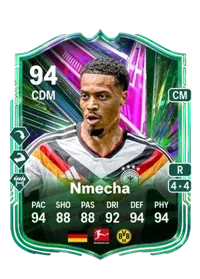
Ultimately, he decides that a central midfielder / CDM type gives him the best value for his next big project. He wants a Bellingham‑style Academy player who can dominate the centre of the pitch, break up play and still contribute to the attack.
The Playstyles he focuses on include:
- Intercept / Anticipate for defensive presence and reading passing lanes.
- Pinged Pass to launch quick, accurate attacks after winning the ball.
- Finesse shot or similar shooting boosts to turn late runs into the box into real goal threats.
He also notes which Playstyles he doesn't have available anymore – for example, missing Quickstep or "rocket" speed‑boosting traits limits how explosive he can make the player. That scarcity forces tough decisions about which Evo paths to prioritise now and which to save for later.
The conclusion: Evolutions are almost like a long‑term RPG build inside FC. Planning them properly, around your own playstyle and available resources, is crucial if you want them to outperform standard promo cards.
How ItemD2R Fits In: Squads, Time-Saving & Coin Strategy
All of these decisions – whether you push for Youth Cup wins, invest in Evolutions or chase Future Stars – ultimately feed into one core resource: your club economy. Time, packs, SBC fodder and coins all interact, and many players feel like they never quite have enough of any of them.
This is where external services come into the picture for some players. Rather than sinking every evening into low‑reward menus or playing with half‑finished teams, some managers choose to stabilise their club with extra coins and then focus on what they actually find fun: grinding Evolutions, mastering tactics or experimenting with creative squads.
Platforms like ItemD2R support this approach by specialising in secure, fast delivery of in‑game currency for football titles. If you decide to look for fc 26 coins cheap, the idea isn't just to throw money at the game; it's to buy back your time. A stronger starting budget lets you:
- Lock in the core of your dream XI early, rather than waiting weeks for market fluctuations.
- Complete high‑value SBCs or Future Stars objectives without constantly running out of fodder.
- Reserve your playtime for the modes you actually enjoy – like the Youth Cup or Weekend League – instead of grinding low‑value menus.
For players who want a wider buffer instead of just a quick boost, you can explore broader coin packages through services focused on fc coins. When used responsibly, this can complement your organic grinding, not replace it. It's about balancing three factors: how much time you have, how competitive you want to be, and how much you enjoy the grind itself.
Of course, you should always stay within your budget, follow the game's terms of service and treat these services as a tool, not a requirement. Many players will still prefer the purely grind‑only route, but for others, unlocking more squad options early is what keeps the game fresh throughout the entire Future Stars cycle and beyond.
Chill Gaming, Fitness & Looking Beyond the Meta
Towards the end of the stream, the atmosphere becomes more relaxed. The conversation drifts to fitness, holiday plans and Olympic sports, with some light jokes about other games that might be worth trying. It's a reminder that even for dedicated creators, FC is still just one piece of a bigger lifestyle.
He stresses that he uses FC as a way to unwind. Real competition – the kind that really gets his heart racing – he prefers to look for in other areas. That mindset keeps him from getting tilted by a single bad Youth Cup game or a toxic opponent spamming celebrations.
Before signing off, he outlines his future plans: more Evolution projects, more Youth Cup runs (including using spare entries to help others with free wins), and streams around upcoming token drops like the 20.02 milestone. He finishes with a raid to another streamer, a thank‑you to everyone for likes, follows and subs, a reminder to support the YouTube channel, and a final note encouraging viewers to step outside for a bit and get ready for the weekend's Bundesliga action.
In the end, that's the real lesson of this Road to Karl: build squads you enjoy, use systems like Evolutions and Future Stars to tell your own story in FC, and don't let the sweatiest parts of the game define your entire experience.






















 OPEN FREE PLAYER PACK
-
FC 26 Greats of the Game – Release Date, All Players & How to Prepare (June 19)Jun 16,2026
-
FC 26 Samuel Eto'o Festival of Football Gauntlet — Is the Grind Worth It?Jun 16,2026
-
FC 26 Low Driven Shot — Controls, PlayStyle+ & When to Use It (2026 Guide)Jun 15,2026
-
FC 26 FUT Champions Tokens — Best Rewards & How to Spend (June 2026)Jun 15,2026
-
FC 26 Path to Glory Team 2 – Best Cards Ranked: Bellingham 96, Wirtz 96, Musiala 95Jun 14,2026
-
93+ UEFA Winners & TOTS Player Pick SBC FC 26 – Is It Worth It? (Expires June 16)Jun 14,2026
-
FC 26 Greats of the Game — Kempes & Rivellino New ICON Cards: Release Date June 19, What to KnowJun 13,2026
-
FC 26 Path to Glory Pedro Neto SBC — Worth It? 465K for a 95 RM (June 2026)Jun 13,2026













 YouTube
 Facebook
 Twitter
 Tiktok
 Discord
 Linktree






 Join us
