



FC 26 RTG Weekend League: 14–1 With EVO Gullit & Zico Review


















- FC 26 RTG Weekend League Overview
- Testing EVO Gullit: Is This Card Really Unfair?
- Zico as the Ultimate CAM in FC 26
- Tactics Breakdown: 4-2-3-1 vs 4-4-1-1
- Weekend League Run: From 7–0 to a 14–1 Finish
- 14–1 Rewards, Time-Warp Cards & Pack Luck
- Full Squad Review & Player Ratings
- Building a Better RTG: Coins, Upgrades & ItemD2R
- Final Thoughts & Tips for Your Next Weekend League
FC 26 RTG Weekend League Overview
In this FC 26 Road to Glory (RTG) episode, the creator jumps into the final stretch of Weekend League with an outstanding record: 7–0 with eight games left. The goal is clear—push for that perfect 15–0 finish while testing a newly evolved version of Ruud Gullit (“EVO Gullit”) alongside a squad built around elite attackers like Zico, Ronaldo and Pina.
Across the session he:
- Experiments with an evolved Gullit card in an advanced role.
- Leans heavily on Zico, who feels like the best CAM he has used so far in FC 26.
- Alternates tactics between the fun, familiar 4-2-3-1 and the dominant meta 4-4-1-1.
- Faces a known elite/top 100-level opponent who ends the 15–0 dream.
- Finishes with a very strong 14–1 Weekend League record.
Along the way he opens his rewards, reacts to a couple of time-warp promo pulls, and gives an in-depth review of his goalkeeper, defenders, midfield, and attack. The episode doubles as a practical guide for players who want to improve their Weekend League performance without abandoning their RTG philosophy.
Testing EVO Gullit: Is This Card Really Unfair?
The headline of the episode is all about one card: an insane EVO version of Gullit. The creator has been steadily upgrading this Gullit through evolution objectives, turning him into a versatile midfielder with excellent passing and physical presence.
Evolution choices & missed shooting playstyles
Before jumping into the games, he reflects on the evolution path he chose. While the upgrades have boosted finishing and overall stats, he is not completely satisfied with the shooting playstyles available on this EVO Gullit. Specifically, he points out that:
- The card does not have finesse or low-driven shot playstyles.
- Some shot animations feel sluggish compared to sharper attackers.
- He often instinctively triggers low drivens with Gullit, then remembers the card lacks that playstyle.
To mitigate this, he applies another free evolution upgrade focused on finishing, trying to squeeze every bit of value out of the card before Weekend League pressure ramps up.
Best position: CAM or center mid?
The big tactical question is where to play EVO Gullit. The creator initially wants to use him as a central attacking midfielder (CAM) to exploit his passing and shooting upgrades. However, there are restrictions on the evolutions and chemistry, which limit how flexible the positioning can be.
After some in-game testing, his conclusion is nuanced:
- As a CAM: Gullit contributes goals and assists but sometimes feels too slow on the shot release to be truly clinical in tight spaces.
- As a center mid (CM): He may actually shine more, using his strength, passing range, and box-to-box presence rather than being the primary finisher.
He even mentions that he is not afraid to sub Gullit off for Chavi in key moments if he needs more explosive finishing and more consistent low-driven shots.
First match with EVO Gullit: Hat trick and mixed feelings
In Gullit’s first real Weekend League test, the creator goes in cautiously. Very quickly, though, Zico opens the scoring and reminds him how reliable his main CAM is. As the game progresses, Gullit gets more involved:
- He notices again that Gullit’s shot wind-up feels long, especially when trying low drivens that the card simply doesn’t specialize in.
- Despite those concerns, both Zico and Gullit rack up goals.
- Gullit ends the match with a hat trick, making the creator 8–0 overall.
After the match, he praises Gullit’s passing and attacking movement but still insists that the card would feel perfect if it had the right shooting playstyles and a quicker release. In his words, EVO Gullit is dangerous and fun, but not quite the flawless CAM some might expect just from looking at the stats.
Zico: The Best CAM in FC 26 RTG?
If Gullit is the experiment, Zico is the constant. Throughout the episode, the creator repeatedly calls Zico his favorite card and even goes as far as rating him 10/10 at the end of the run.
Elite finishing and shot consistency
Zico stands out because his shooting feels instant, clean and reliable. Whenever there’s a tight angle or a crucial chance late in a game, the creator looks for Zico:
- His shot release is noticeably quicker than Evo Gullit’s.
- He converts under pressure, especially in matches where the gameplay feels heavy.
- He constantly pops up in dangerous pockets between the lines in the 4-2-3-1.
In multiple matches, when the momentum swings or the opponent starts pressing, Zico is the one who stabilizes the game with a key goal or assist.
Carrying in key moments
Even though the RTG squad features strong names across the board, Zico feels like the card that holds everything together:
- He carries in comeback scenarios, especially after going a goal down early.
- He remains reliable even when passing feels inconsistent in certain matches.
- The creator repeatedly states that Zico is “different” and one of the best cards he has used in FC 26.
By the end of the Weekend League, there is no doubt that Zico is the heart of the attack and a must-start in any serious game.
Tactics Breakdown: 4-2-3-1 vs 4-4-1-1
Another core theme in the episode is the balance between playing the absolute meta and playing what’s genuinely enjoyable. For this RTG, the creator mostly sticks to the 4-2-3-1, even though he recognizes that the 4-4-1-1 is currently incredibly strong at the top level.
Facing the 4-4-1-1: A top player and a costly loss
The defining match of the run comes against an opponent using the 4-4-1-1. The creator immediately suspects this player is elite or pro level, and the game quickly confirms it:
- He struggles to clear the ball and concedes during a frustrating sequence in his own box.
- At halftime, he decides to sub off Gullit for Chavi in an attempt to chase the game.
- He scores an equalizer, has another goal ruled offside, and then the opponent capitalizes ruthlessly.
The match ends 5–2. Statistically, the opponent finishes with five shots and five goals, while the creator creates more chances but is less clinical. It is a harsh reminder that at the very top level, every missed chance matters.
That single loss ends the dream of a 15–0 Weekend League, but he stays positive, acknowledging that the opponent has finished top 100 in previous years and is clearly one of the tougher matchups he could have drawn.
Sticking with the 4-2-3-1 for fun and control
Despite recognizing how strong 4-4-1-1 is, the creator chooses to stick with the 4-2-3-1 for most of his games. For him, this setup offers:
- Defensive stability thanks to the two DMs screening the back line.
- A natural central playmaker role for Zico at CAM.
- Wide CAMs who help stretch the pitch and create cutback opportunities.
He openly admits that switching to the meta 4-4-1-1 might have maximized his win rate, but he values enjoyment and identity in his RTG. The 4-2-3-1 fits the way he likes to play, even if it means a 14–1 finish instead of a flawless 15–0.
Weekend League Run: From 7–0 to a 14–1 Finish
The narrative of the Weekend League is a rollercoaster of form, emotions, and momentum management. Starting at 7–0, the creator has eight games left to try and go all the way.
The danger of the game after a loss
After the painful 5–2 defeat to the elite opponent, he warns that the next game is often the most dangerous emotionally. This is where many players tilt, chase tackles, and throw away wins that should be routine.
In that bounce-back match, he concedes early again but regains composure:
- Peanut and Gullit help swing the game back in his favor.
- Zico once again scores in a key moment.
- The opponent eventually rage quits, giving him a mental reset and a crucial win.
Climbing to 11–1, 12–1, and beyond
With the frustration of the loss behind him, he strings together more wins in the 4-2-3-1. Not every match is smooth:
- He notes that in some games the gameplay feels heavy, with slower turning and delayed passes.
- Passing can feel inconsistent, especially under pressure and in poor server conditions.
- Despite those issues, he forces rage quits and grinds out results in tighter matches.
In one notable game, he misses a penalty—something he says usually “guarantees” a loss for him. This time, he breaks that pattern and still manages to win, which he celebrates as a small psychological victory.
As he continues, he reaches 11–1 and then 12–1, knowing that the early defeat has already made the path to 15–0 almost impossible, but a 14–1 finish is very much within reach.
Final match: Locking in a 14–1 Weekend League
Heading into the last game, the pressure is off in one sense—he can no longer go 15–0. But there is still pride and rank on the line. He decides that, win or lose, this has been a great Weekend League simply because he has enjoyed the team and stuck to his style.
In the final match:
- Ronaldo scores early to settle the nerves.
- Pina and other attackers add to the goal tally.
- The game ends in a high-scoring victory, confirming a superb 14–1 finish.
He ends with mixed emotions—happy with how strong the run was, but still slightly frustrated knowing that one game made the difference between 14–1 and the perfect 15–0.
14–1 Rewards, Time-Warp Cards & Pack Luck
With the games done, it’s time for everyone’s favorite (and often most painful) part of Weekend League: rewards. Given a 14–1 finish, he understandably hopes for a huge pull—someone like Messi or a top-tier promo card that could transform his RTG squad.
The actual rewards, however, are fairly underwhelming:
- He packs several high-rated fodder cards, including Trent Alexander-Arnold, Ruben Dias, Rodri, and Harry Kane.
- He pulls a couple of time-warp promo items but finds them disappointing and not game-changing.
- Overall, he labels the rewards as poor for a 14–1 finish, at least in terms of immediate upgrades.
Still, the fodder will be useful for future SBCs, and the episode serves as a reminder that performance and pack luck are not always aligned in FC 26.
Full Squad Review & Player Ratings
The episode closes with a detailed squad review where he goes player by player, rating performance over the Weekend League run. This segment is especially helpful if you are considering similar cards for your own team.
Goalkeeper & defensive line
Starting from the back:
- Goalkeeper: Initially felt shaky, but improved over the weekend. By the end, he rates his keeper highly and feels more confident trusting him in one-on-one situations.
- Joe Gomez: Defensively solid, quick across the ground, and reliable in duels. However, his passing can be inconsistent, which occasionally leads to risky situations when building from the back.
- Right back: Praised for speed and reliability. He covers runs well and rarely gets caught out of position.
- Other defenders: Generally receive positive feedback for their physicality and positioning, contributing to the overall stability of the 4-2-3-1.
Midfielders and defensive mids
In midfield, the focus is on balance between defense and attack:
- EVO Gullit: Excellent passing, physical presence, and late runs into the box. Strong contribution overall, but dragged down slightly by the slow shot release and lack of key shooting playstyles for a pure CAM role.
- Defensive midfielders: Solid but not spectacular. He mentions that this is one of the areas he’d like to upgrade, looking for a more dominant holding mid like a Rodri-type player.
- He also hints at trying another similar DM in Rivals to see if they can bring more composure and control in big games.
Attack: Zico, Pina, Ronaldo & co.
The attacking unit is where the squad truly shines:
- Zico: Rated a straight 10/10. Described as the best CAM he has used in FC 26 and one of the best cards overall. Elite finishing, movement, and playmaking.
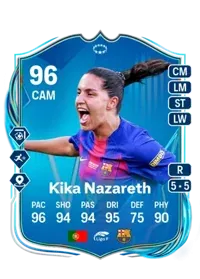
- Pina: Called the standout player of the Weekend League. He even jokes that she’s beyond rating, a sign of how instrumental she is to his attack.
- Ronaldo: Delivers crucial goals, especially in the final match, and thrives as the main striker in 4-2-3-1.
- Peanut: Plays a key role in the emotional and tactical bounce-back after the first loss, contributing goals and energy to swing matches.
Overall, the attack feels explosive, versatile, and capable of breaking down both parked buses and aggressive press systems.
Building a Better RTG: Coins, Upgrades & ItemD2R
One of the most relatable aspects of this RTG is the way the creator carefully chooses where to invest upgrades—especially in defensive midfielders and high-impact attackers like EVO Gullit and Zico. In FC 26, even the best Weekend League performance does not always translate into the players you want from rewards. That is exactly why club economy and coin management have become just as important as tactics.
For players who do not want to wait weeks for untradeable pack luck to line up, an external, reliable coin source can speed up the process of building a competitive squad. Services like cheap fc coins from ItemD2R give you the flexibility to complete expensive SBCs, try meta cards early in the cycle, and test new tactics without liquidating half your club first.
ItemD2R focuses on providing safe and efficient coin delivery for FC 26, which is particularly useful if you’re running a Road to Glory but still want to keep up with the rapidly evolving meta. Instead of being stuck with average DMs or missing out on promo cards that define each season, you can use ea fc coins from ItemD2R to:
- Upgrade your defensive midfield to a Rodri-level anchor or better.
- Experiment with high-tier attackers who complement elite cards like Zico and Pina.
- Refresh your back line with faster, more agile defenders who can survive the Weekend League meta.
By combining smart tactical choices—such as choosing between 4-2-3-1 and 4-4-1-1—with a stable coin flow, you can build a squad that not only competes for 14–1 and 15–0 finishes but also stays fun to use over multiple Weekend Leagues. ItemD2R’s coin solutions support that balance between competitiveness and enjoyment, which is exactly what this RTG episode showcases.
Final Thoughts & Tips for Your Next Weekend League
This FC 26 RTG Weekend League run is a great case study in how to push for elite records while still playing your own way. A few key lessons stand out:
- Card feel matters more than stats: EVO Gullit looks insane on paper, but missing shooting playstyles and a slow release limit him as a pure CAM. Zico, on the other hand, feels perfect in-game.
- Stick to the formation you enjoy: 4-4-1-1 might be the meta, but the 4-2-3-1 gave the creator control and comfort, which often matters more over 20 intense games.
- Manage emotions after a loss: The match right after a defeat is a common choke point. Reset mentally, play your game, and don’t chase.
- Prepare for heavy gameplay: Not every match will feel smooth; you need players like Zico who can still perform when the servers don’t feel perfect.
- Be realistic about rewards: Even a 14–1 run can produce mostly fodder. Plan your upgrades around coins and SBCs, not just pack dreams.
With thoughtful squad building, a formation that suits your style, and smart use of coin resources, you can aim for similar results—or even that coveted 15–0—while still enjoying the grind. Whether you’re experimenting with EVO cards like Gullit or locking in proven stars like Zico and Pina, the key is to blend fun, efficiency and smart resource management every Weekend League.
-
FC 26 Path to Glory Team 1: Predicted Players, Release Date & Live Upgrade Guide (June 5, 2026)Jun 03,2026
-
FC 26 Festival of Football: Full Promo Schedule, Path to Glory & What to Expect (June–July 2026)Jun 03,2026
-
EA FC 26: Ultimate Team Token System ExplainedJun 03,2026
-
FC 26 Ultimate TOTS Upgrade SBC — Is It Worth It? Last Chance Before June 3 DeadlineJun 03,2026
-
EA FC 26 Path to Glory — World Cup Upgrade TrackerJun 02,2026
-
EA FC 26 Path to Glory: Start Date, Leaks & Best TipsJun 02,2026
-
How EA FC 27 Can Win Back Frustrated FC 26 PlayersJun 02,2026
-
EA FC 26 Meta Update: Analog Sprint, Top Formations & 500k SquadJun 02,2026













 YouTube
 Facebook
 Twitter
 Tiktok
 Discord
 Linktree






 Join us
